



Typhoon Fighter EF-2000
Is a European multi-national joint development of twin supersonic multi-role fighter. It was developed by the UK, Germany, Italy and Spain and built by a consortium of Airbus, BAE Systems and Leonardo.
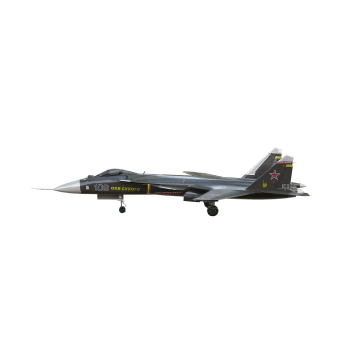
Russian Su-47 "Berkut" fighter (dark green)
It is a supersonic fighter developed by the Russian Sukhoi Design Bureau and first flew in September 1997. The design goal is to be a next-generation fighter with ultra-maneuverability and stealth capabilities, designed to replace Soviet-era fighters and meet the needs of modern air combat. The most notable feature is its forward-swept wing design, which is similar to the American X-29 test machine and can provide a higher lift-to-drag ratio and better maneuverability. Significant progress has been made in technology, but due to the inability to meet the specific needs of the Russian military, it finally failed to enter mass production. But it marks Russia's innovation and development in the field of fighter design.

Russian Su-47 "Berkut" fighter
It is a supersonic fighter developed by the Russian Sukhoi Design Bureau and first flew in September 1997. The design goal is to be a next-generation fighter with ultra-maneuverability and stealth capabilities, designed to replace Soviet-era fighters and meet the needs of modern air combat. The most notable feature is its forward-swept wing design, which is similar to the American X-29 test machine and can provide a higher lift-to-drag ratio and better maneuverability. Significant progress has been made in technology, but due to the inability to meet the specific needs of the Russian military, it finally failed to enter mass production. But it marks Russia's innovation and development in the field of fighter design.

Swedish Saab35Draken Fighter
It is a supersonic fighter designed and manufactured by the Swedish Saab company in the 1950 s. It is the first supersonic aircraft of the Swedish Air Force and the first mass-produced dual-delta aircraft in the world. Draken means "dragon" or "kite" in Swedish. Its design features a double delta wing layout, with an inner wing leading edge sweep angle of 80 ° and an outer wing leading edge sweep angle of 57 °. This design provides good performance at both high and low speeds. He served in the Swedish Air Force for many years until his official retirement in 1999. The design and performance made it an important Nordic air defense force during the Cold War.

Russian MiG-31 "Foxhound" interceptor (gray)
It is a Soviet/Russian tandem two-seater all-weather interception fighter designed by Mikoyan and Gleevich Design Bureau. It was developed to replace the MiG-25 "Foxbat" and was designed to intercept high-speed, high-altitude targets. It first flew in 1975 and entered service in 1983. It has an upper single wing, double vertical tail and air intake layout on both sides, with a captain of 22.69 meters, a wingspan of 13.46 meters and a height of 6.15 meters. It is equipped with two D-306 afterburner turbofan engines. Known for its high speed, long range, large bomb load and strong interception capability, it is still one of the main fighters of the Russian Air Force.
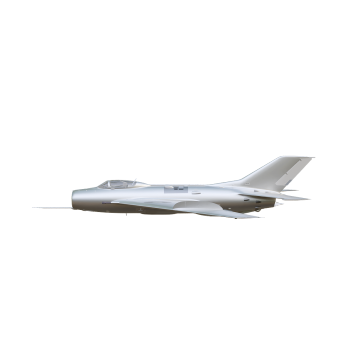
Soviet MiG-19S "Fagot" jet fighter
It is a single-seat twin-engine jet fighter developed by the Mikoyan-Gleevich Design Bureau of the Soviet Union in the 1950 s. It is the first supersonic fighter in mass production in the Soviet Union. It is an improved model in the MiG-19 series, known for its excellent climb rate and high-speed performance. It was difficult to maneuver while flying at supersonic speeds, but excelled in the rate of climb. During the Cold War, he was one of the main fighters of the Soviet Union and its allies and participated in many conflicts and wars. The design and performance were advanced at the time, but with the emergence of a new generation of jet fighters, they fell behind in technology. It still occupies an important position in the history of flight and is a milestone.

Russian MiG-31 "Foxhound" Intercept Fighter (Black)
It is a Soviet/Russian tandem two-seater all-weather interception fighter designed by Mikoyan and Gleevich Design Bureau. It was developed to replace the MiG-25 "Foxbat" and was designed to intercept high-speed, high-altitude targets. It first flew in 1975 and entered service in 1983. It has an upper single wing, double vertical tail and air intake layout on both sides, with a captain of 22.69 meters, a wingspan of 13.46 meters and a height of 6.15 meters. It is equipped with two D-306 afterburner turbofan engines. Known for its high speed, long range, large bomb load and strong interception capability, it is still one of the main fighters of the Russian Air Force.

Russian MiG-31 "Foxhound" Intercept Fighter (Blue)
It is a Soviet/Russian tandem two-seater all-weather interception fighter designed by the Mikoyan and Greevich Design Bureau. It was developed to replace the MiG-25 "Foxbat" and was designed to intercept high-speed, high-altitude targets. It first flew in 1975 and entered service in 1983. It has an upper single wing, double vertical tail and air intake layout on both sides, with a captain of 22.69 meters, a wingspan of 13.46 meters and a height of 6.15 meters. It is equipped with two D-306 afterburner turbofan engines. Known for its high speed, long range, large bomb load and strong interception capability, it is still one of the main fighters of the Russian Air Force.

Russian MiG-31 "Foxhound" Intercept Fighter (Army Green)
It is a Soviet/Russian tandem two-seater all-weather interception fighter designed by Mikoyan and Gleevich Design Bureau. It was developed to replace the MiG-25 "Foxbat" and was designed to intercept high-speed, high-altitude targets. It first flew in 1975 and entered service in 1983. It has an upper single wing, double vertical tail and air intake layout on both sides, with a captain of 22.69 meters, a wingspan of 13.46 meters and a height of 6.15 meters. It is equipped with two D-306 afterburner turbofan engines. Known for its high speed, long range, large bomb load and strong interception capability, it is still one of the main fighters of the Russian Air Force.

Russian MiG-31 "Foxhound" Intercept Fighter
It is a Soviet/Russian tandem two-seater all-weather interception fighter designed by Mikoyan and Gleevich Design Bureau. It was developed to replace the MiG-25 "Foxbat" and was designed to intercept high-speed, high-altitude targets. It first flew in 1975 and entered service in 1983. It has an upper single wing, double vertical tail and air intake layout on both sides, with a captain of 22.69 meters, a wingspan of 13.46 meters and a height of 6.15 meters. It is equipped with two D-306 afterburner turbofan engines. Known for its high speed, long range, large bomb load and strong interception capability, it is still one of the main fighters of the Russian Air Force.

Sukhoi Su-27 fighter jet
It is a twin engine supersonic and super maneuverable fighter designed by the Soviet Sukhoi Design Bureau. Competing with the fourth generation large jet fighters of the United States such as the Grumman F-14 Tomcat and the McDonnell Douglas F-15 Eagle, it has a combat radius of 3530 kilometers, carries heavy aviation weapons, is equipped with cutting-edge avionics, and has excellent maneuverability. Originally designed for air superiority missions, subsequent derivative models were able to perform almost all types of air combat missions. Complementing the MiG-29 fighter design of the Mikoyan Design Bureau, they jointly formed the main fighter squadron of the Soviet Union and later the Russian Air Force

Saab JAS39 "Eagle Lion" fighter jet
It is a lightweight single engine supersonic multi-purpose fighter manufactured by Saab in Sweden. Featuring a delta wing and duck shaped layout, adopting a relaxed stability design and a fly by wire flight control system. The later models are fully compatible with NATO. As of 2020, over 271 Eagle Lion aircraft of various models have been delivered, including A to F. The first flight was in 1988, and the first mass-produced aircraft was delivered in 1993. In 1996, it began serving in the Swedish Air Force. In 2003, upgraded models equipped with more advanced avionics and adapted to longer mission times began service. The main redesigned models of the Eagle Lion series.

Mig-23 UB dual seat trainer fighter jet
It is a Soviet/Russian second-generation supersonic jet fighter. The MiG-23 fighter jet adopts a single seat variable sweep wing aerodynamic layout and is equipped with a turbojet engine. Its outstanding performance is high flight speed, reaching 2.35 times the speed of sound at high altitude and 1350 kilometers per hour at low altitude. It also has good horizontal acceleration, which is conducive to low altitude breakthrough, high-speed interception, and detachment after attack. MiG-23UB, a two seater trainer type MiG-23, also known as MiG-23UM. The internal code 23-511 made its maiden flight in May 1969. The first aircraft was modified from a MiG-23S model, and later from a MiG-23M model.

US F-14 supersonic multi-purpose carrier based fighter jet
It is a supersonic multi-purpose carrier based fighter jet from the United States. The F-14 fighter jet is designed with a dual seat, twin engine, twin vertical tail, variable sweep, and single wing layout. It was developed based on the requirements of the US Navy's fleet air defense and escort in the 1970s and 1980s. Its main functions include fleet defense, interception, strike, and reconnaissance. In 1987, the F-14B equipped with improved engines was officially put into production to replace the Navy's F-4 Phantom. In 1988, the F-14 underwent further improvements and upgrades in radar, avionics, and missile mounting capabilities, and was named the F-14D "Super Tomcat"

Popular Models
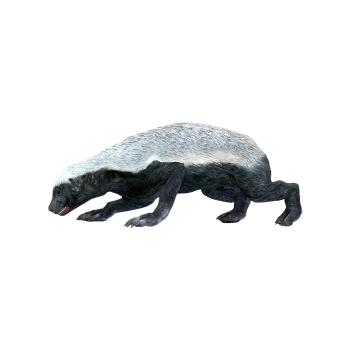
Honey Badger (3D animated model)
192 View
Guinea fowl (3D animated model)
163 View
Wild Goose (3D animated model)
185 View
Red Fox (3D animated model)
153 View
Random Model


basketball stand
393 View

Komodo dragon 3D model animation
1086 View

Xiaochen Yixi Zun
1066 View


Z-type cable car
556 View

Pottery Tilder Pot
370 View
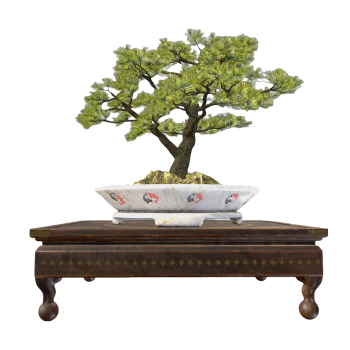
Welcoming Guest Pine Bonsai
1030 View